
Grey Chevrolet Silverado 1500 with a Paillé GM team member at the open driver door

Chevrolet Silverado 1500 vs. 2500 vs. 3500: full comparison

Choosing between a Silverado 1500, 2500 HD and 3500 HD is not simply about moving up in towing capacity. As you climb the lineup, you gain towing and payload, but your truck also becomes heavier and more cumbersome in daily use.

The 1500 is the most versatile of the three. The 2500 HD becomes appealing when heavy loads and towing are a regular part of your day. The 3500 HD goes further, especially for big fifth-wheels and situations where payload matters just as much as what you pull.

The differences are not always obvious when the trucks are parked side by side. Yet once you are behind the wheel and loaded, they are not the same tools at all. Frame, axles, suspension, weight, dimensions and capabilities change enough that a 2500 HD or a 3500 HD could be perfect for you, or on the contrary, unnecessarily large.

Chevy Silverado 1500 vs. Silverado HD: pricing and available trims

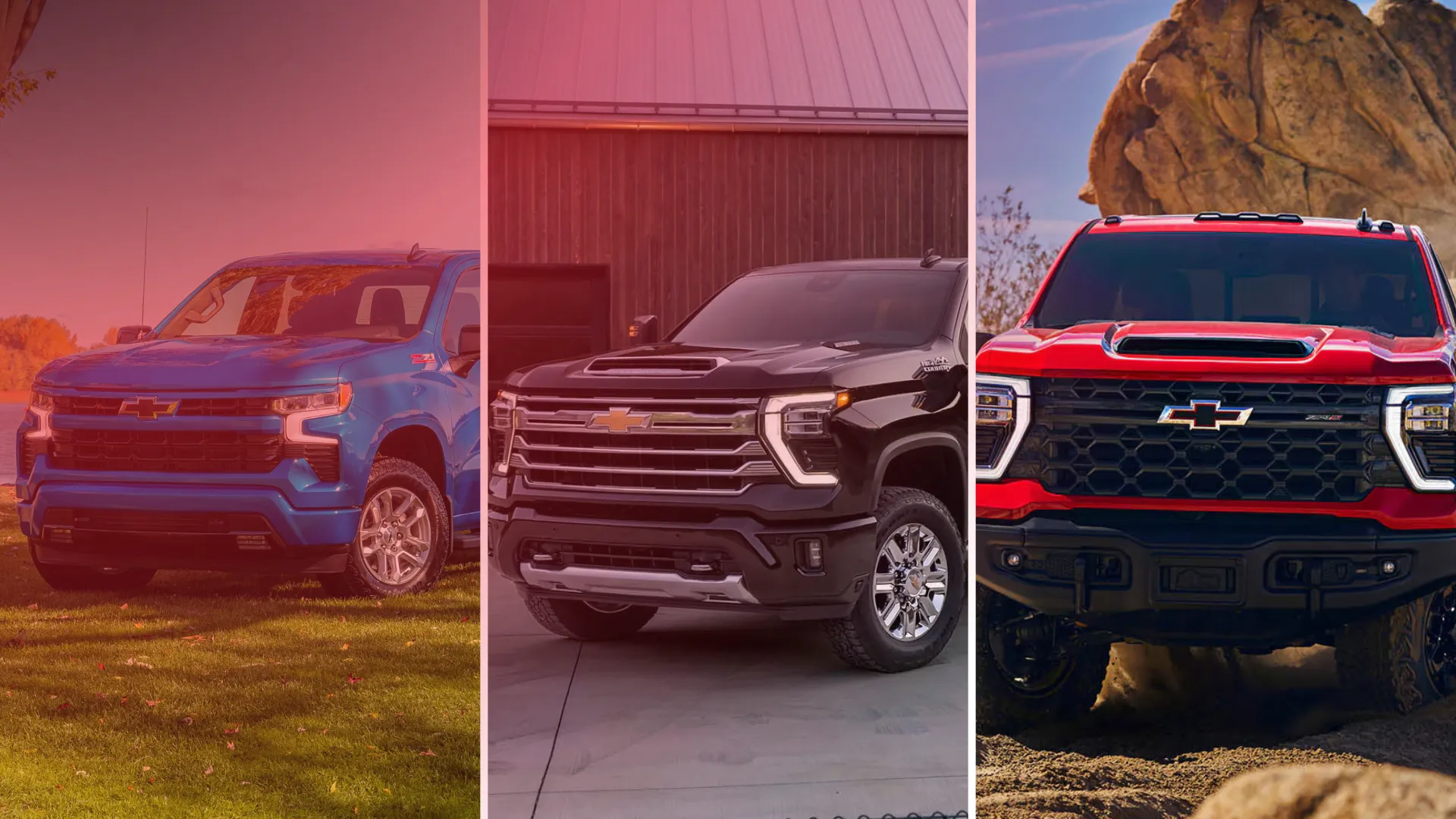
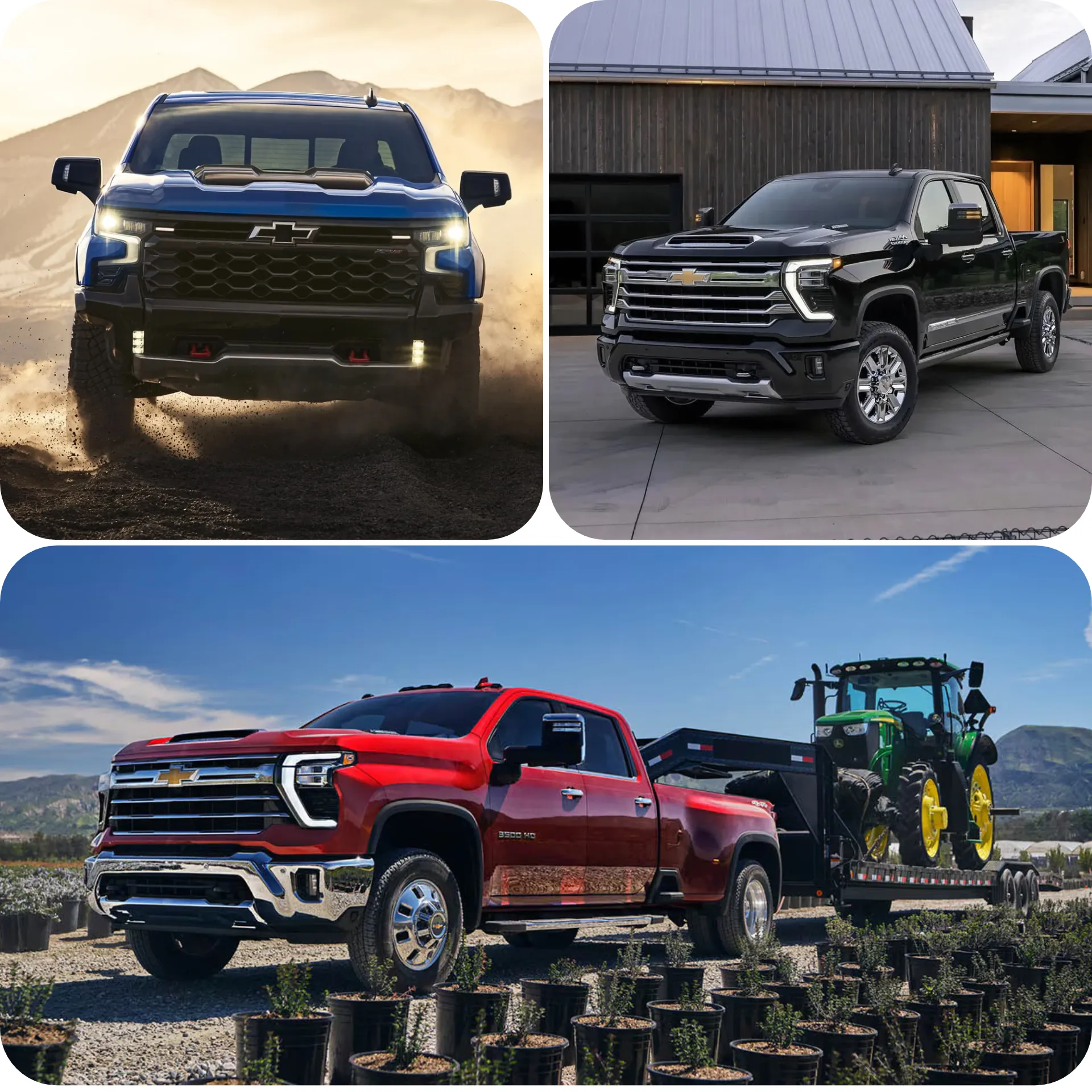
Montage of three Chevrolet Silverado trucks: a dark HD kicking up dust on a desert trail, a black pickup parked in front of a modern house, and a red HD hauling a tractor on a trailer

The 2026 Chevrolet Silverado 1500 comes in nine trims, from WT to High Country, while the 2500 HD offers six and the 3500 HD, four. The comparison between the 2026 Chevrolet Silverado 1500 vs. 2026 Chevrolet Silverado HD 2500 therefore starts right in the catalogue: the half-ton and certain 2500 configurations cover family, recreation and work, while well-equipped HD models are ideal for the jobsite or for towing larger trailers. Manufacturer pricing for 2026 starts at $52,525* for the 1500 and at $68,025* for the HD trucks.

* These are the prices available on the manufacturer's site at the time of research. They are subject to change without notice.
Which model to choose based on your budget?

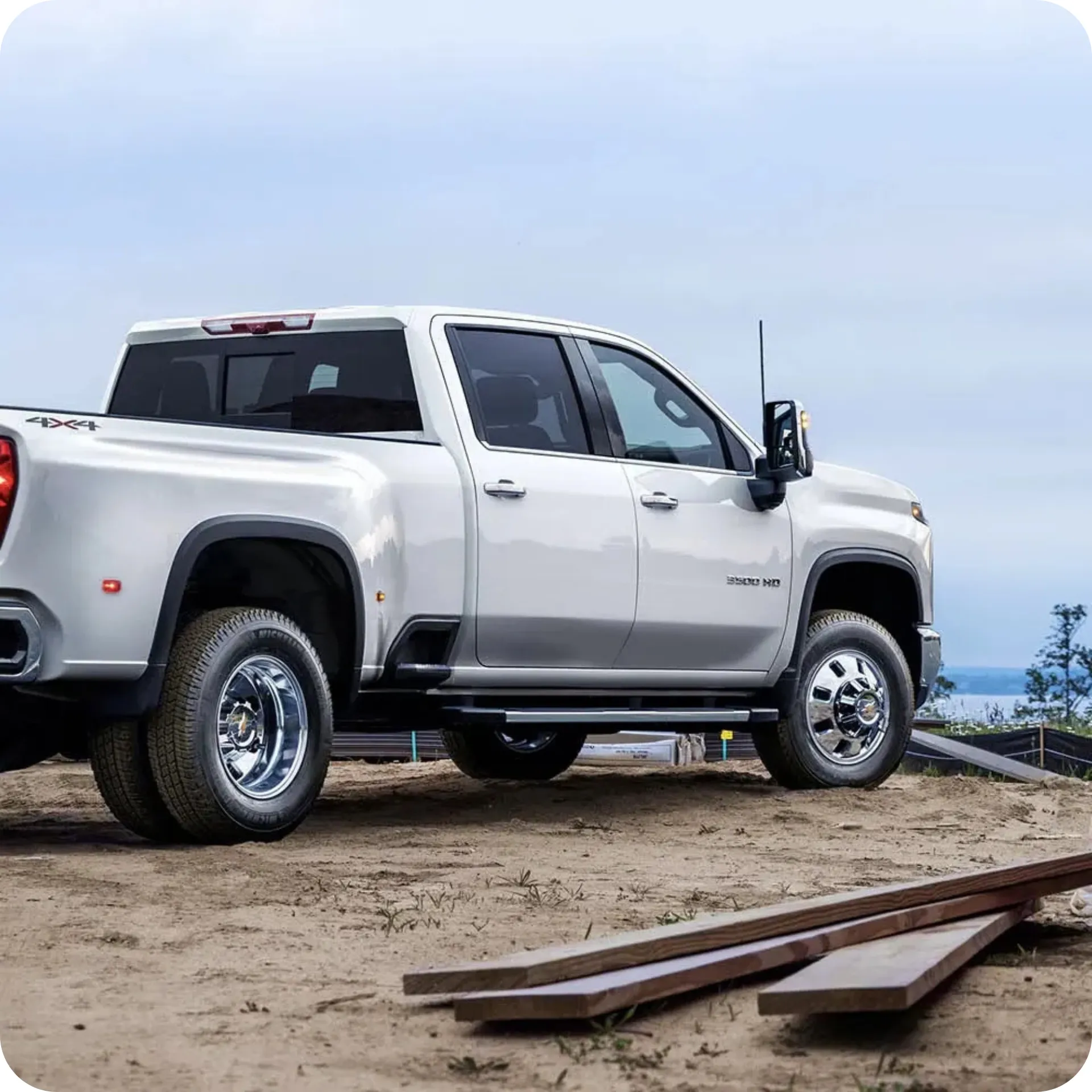
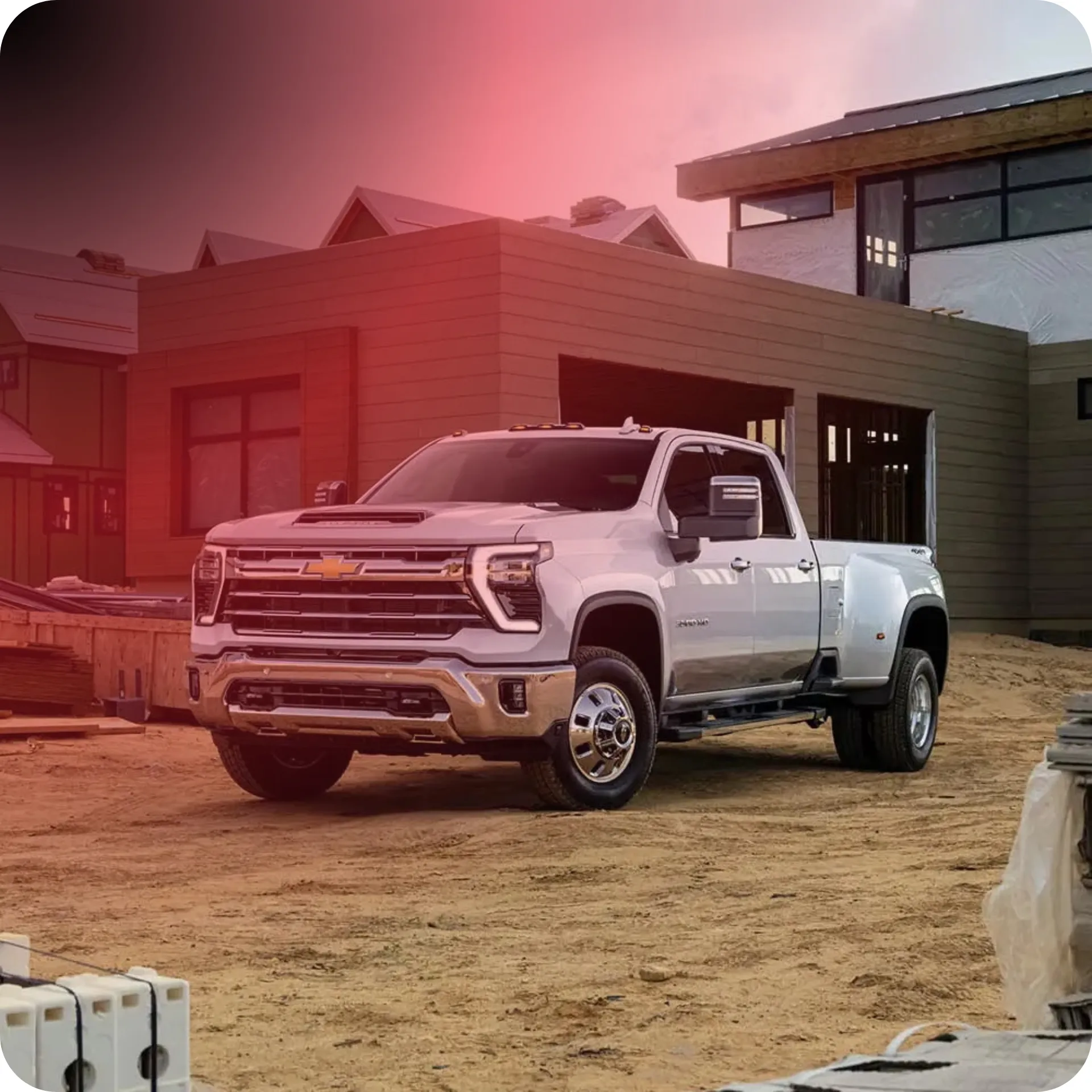
White Chevrolet Silverado 3500 HD dually with dual rear wheels parked on a dirt lot in front of a modern building

The purchase price gap is only part of the equation. An HD is also heavier, uses a 6.6 L V8 and can be fitted with a larger fuel tank. Conversely, paying for a 3500 HD does not bring much if you never use its extra capacity.

The right approach is to buy enough truck to keep a margin over your usual loads, without paying all year for capabilities you don’t need.

Silverado 1500 vs. 2500 vs. 3500: powertrains and performance

The 1500 lineup offers four engines, versus two for the HD models, calibrated for sustained effort.

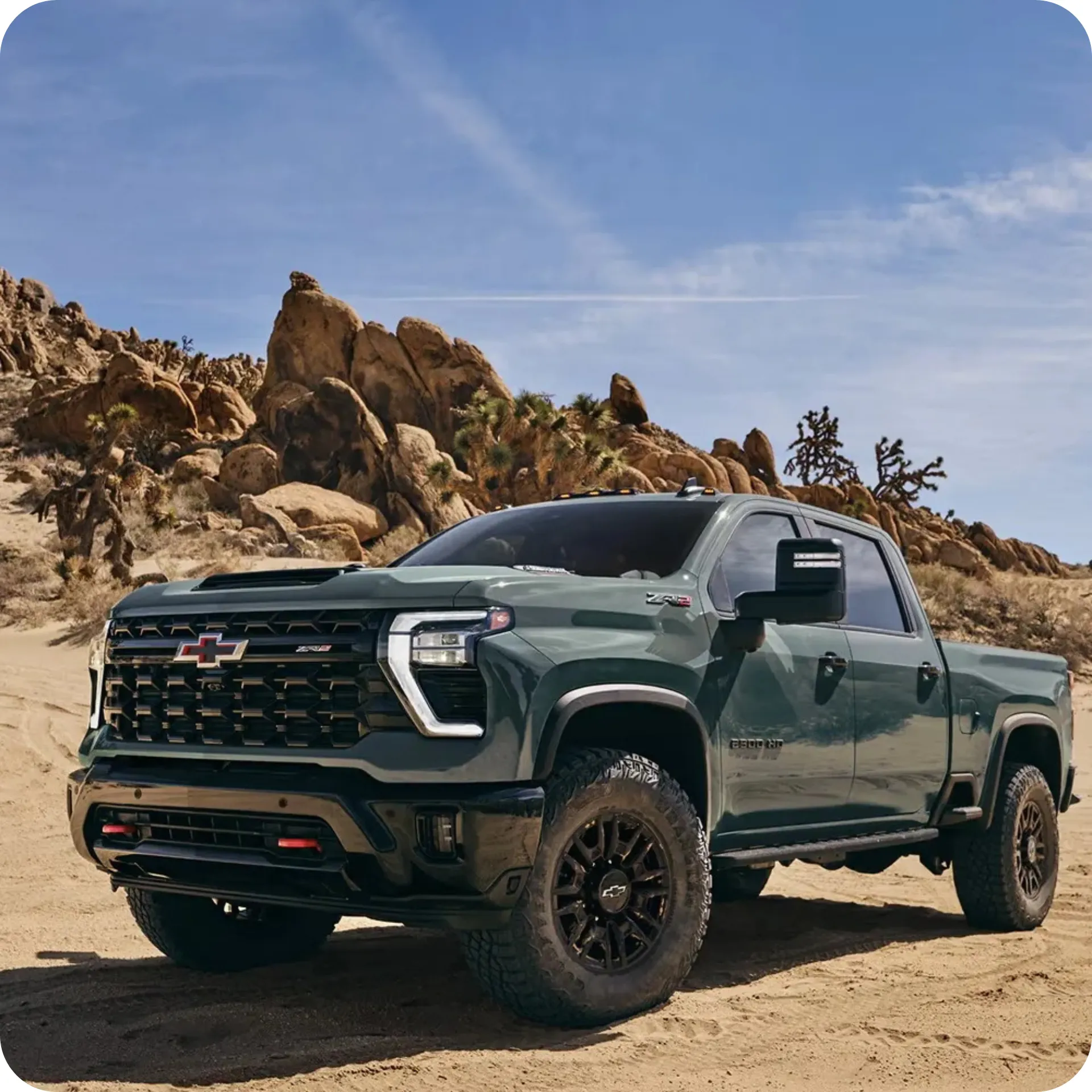
Dark green Chevrolet Silverado 2500 HD parked on sandy ground among desert rock formations under a blue sky

The 2026 Chevy Silverado 1500: 2.7 L TurboMax (310 horsepower, 430 lb-ft), 5.3 L EcoTec3 V8 (355 horsepower, 383 lb-ft), 6.2 L V8 (420 horsepower, 460 lb-ft) and 3.0 L Duramax turbo-diesel (305 horsepower, 495 lb-ft)

The 2026 Chevrolet Silverado 2500 HD and 3500 HD: 6.6 L gas V8 (401 horsepower, 464 lb-ft) and 6.6 L Duramax turbo-diesel V8 (470 horsepower, 975 lb-ft), with a 10-speed automatic transmission

The HD 6.6 L Duramax produces almost twice the maximum torque of the 1500's 3.0 L Duramax: 975 vs. 495 lb-ft. The engine alone does not explain the capacity difference, however. The frame, axles, suspension and other HD components are also designed to support much higher loads.

Within the HD family, a comparison of the Silverado 2500 vs. 3500 shows nothing changes mechanically, since both trucks receive the exact same engines. The difference lies in the frame and axles, and in the options for dual rear wheels.

Silverado 1500 vs. 2500 vs. 3500: towing capacity** and payload**

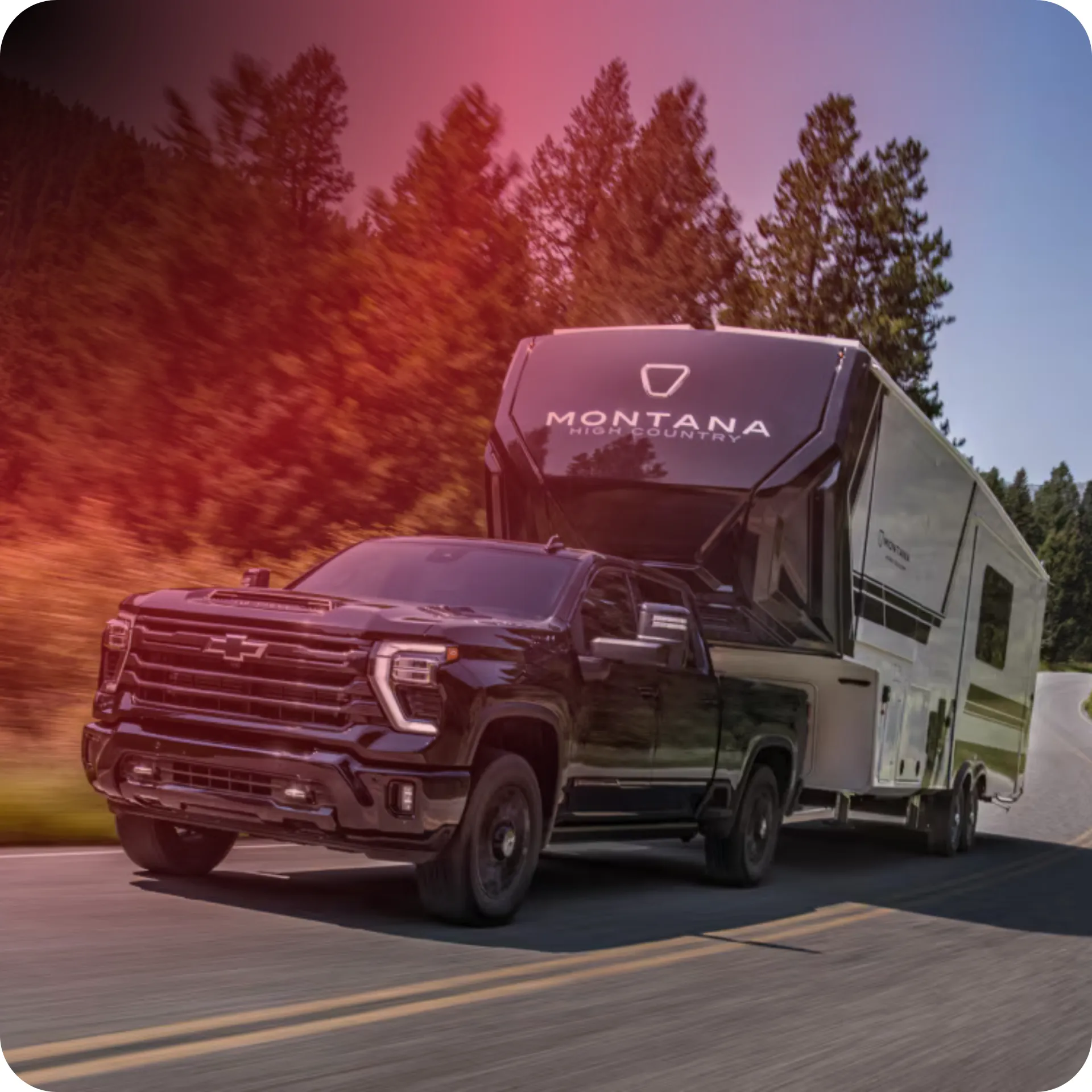
Dark Chevrolet Silverado 2500 HD towing a Montana fifth-wheel travel trailer on a paved road lined with pine trees

The 1500 tows from 8,700 lb. (3,946 kg) to 13,300 lb. (6,033 kg), with a maximum payload of 2,380 lb. (1,080 kg). The 2500 HD climbs to 22,070 lb. (10,011 kg) and the 3500 HD reaches 36,000 lb. (16,329 kg) with the Duramax. These are the numbers published by the manufacturer, which differ from real-world results. A Paillé expert will help you understand the difference between the two.

To put these capacities in context, a conventional travel trailer can easily stay within 1500 territory, while a large fifth-wheel can quickly put the 2500 or 3500 into the equation. The real loaded trailer weight and its tongue or pin weight matter much more than its length.

Towing capacity tends to grab the spotlight, but payload can reach its limit first, especially with a fifth-wheel. The weight applied in the cargo bed, the passengers and the gear all count toward that figure. This is one of the main reasons to look at a 3500 even when a 2500 seems able to pull the total weight of your trailer.

That is where a conversation with a Paillé expert will help you target your real needs, so you can choose the right truck to meet them.

Pro tip:

“People think they can look at the advertised maximum towing and that’s it, they leave with the right truck. That’s a mistake. You MUST check payload first, because even if you have the right towing capacity but not enough payload, you cannot make the most of the towing capacity that is available. That’s why a discussion with a Paillé expert is essential.

Here’s an example: with a 2500 HD with a factory de-rated GVWR in a mid-trim configuration, like an SLE at GMC or a Custom at Chevrolet, you have about 1,850 lb. of payload. Paired with a 16,000 lb. trailer, that might seem to be under the technical towing capacity.

BUT if the trailer weight applied to the cargo bed is higher than the payload, you still exceed the truck's technical capacity. That’s why talking with an expert is the best way to make sure you leave with the right truck.”

‒Alexandre Rivest, sales consultant.

Silverado 1500 vs. 2500 vs. 3500: dimensions and interior space

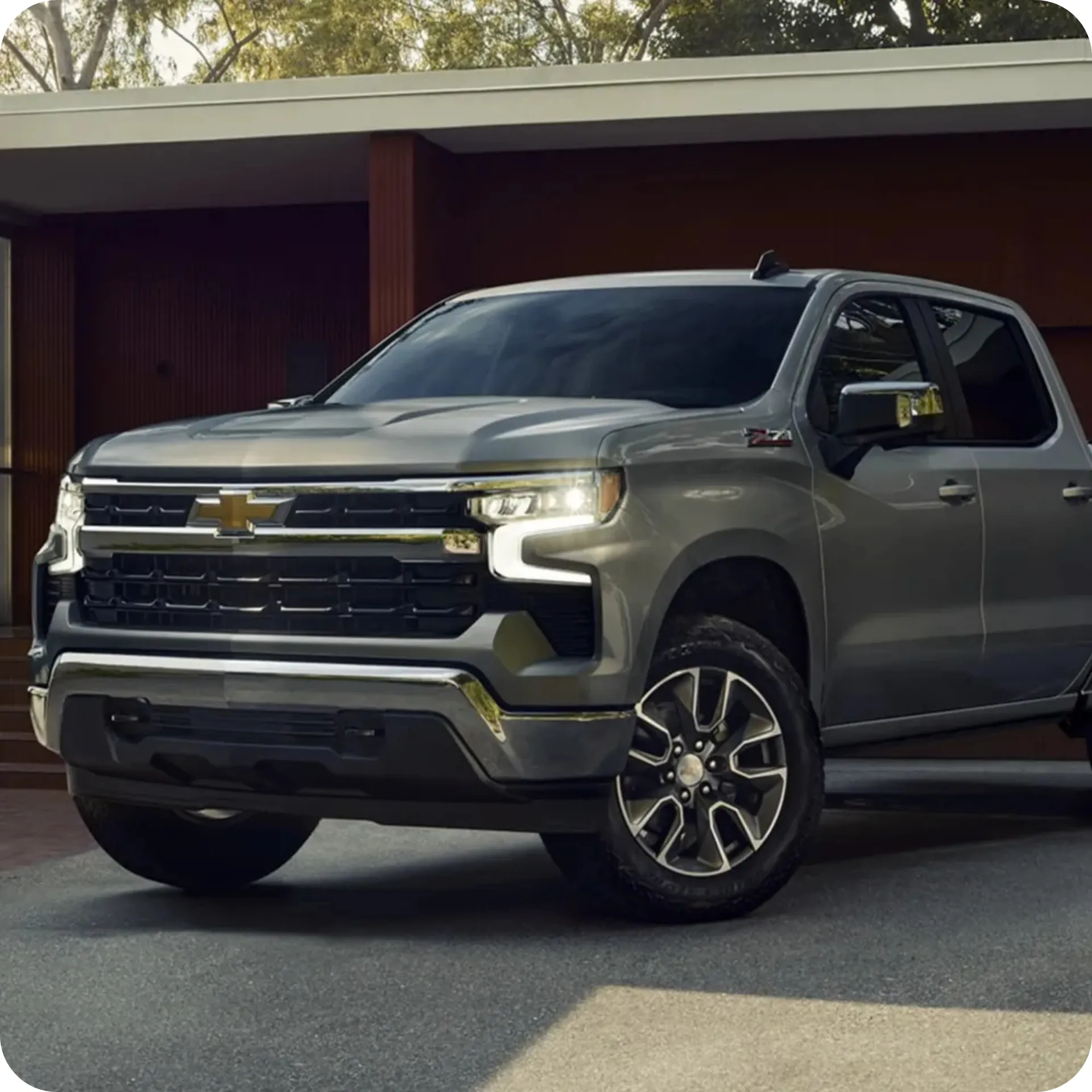
Gray-green Chevrolet Silverado 1500 crew cab, front three-quarter view, parked in front of a garage

The 1500 measures between 211 to 242 inches (5,359 and 6,147 mm), with 97.5 inches of width, rearview mirrors included. The HD models stretch from 235.5 to 266 inches (5,982 to 6,756 mm) and reach 105.2 inches of width, nearly 8 inches more.

In front of your standard 96-inch residential garage door, that 105.2-inch width becomes a concrete issue. Inside, front clearances are identical: 1,093 mm of headroom, 1,131 mm of legroom, 1,677 mm of shoulder room.

Silverado 1500 vs. 2500 vs. 3500: technology and equipment

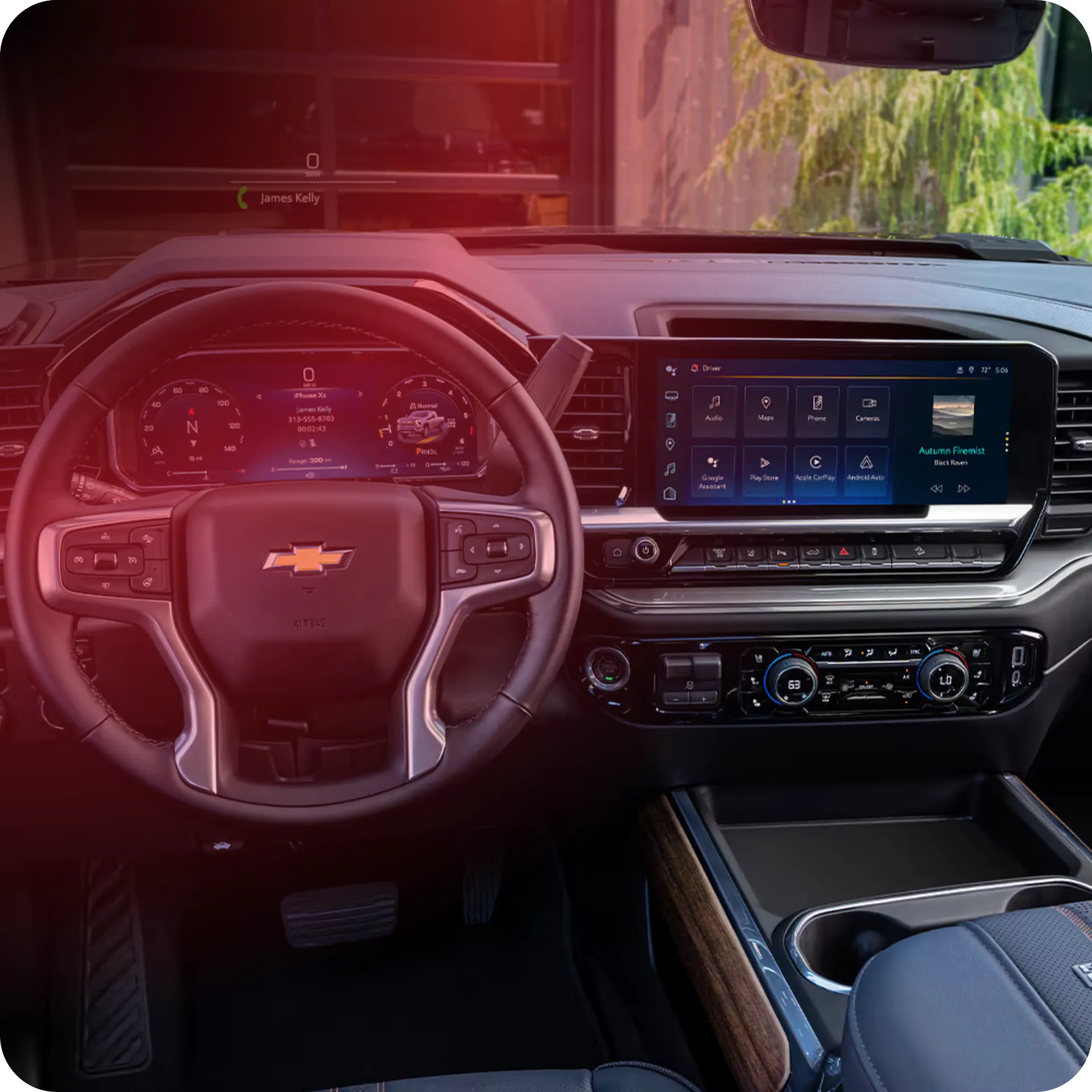
Interior of a Chevrolet Silverado 2500 HD: steering wheel, digital instrument cluster and central touchscreen

Both families share the 13.4-inch touch screen, the 12.3-inch driver information centre, Google built-in, up to 8 cameras and 14 viewing angles, the in-vehicle trailering app and the transparent trailer view. Two distinctions: Super Cruise with towing on the 1500 High Country, and a 2,523 L (89.1 cu. ft.) cargo bed versus 2,365 L (83.5 cu. ft.) for the HD models.

Which model suits you best?

A simple rule gives you a better idea of which truck to pick between the Chevrolet Silverado 1500 vs. 2500 vs. 3500, before you talk to a Paillé expert: the right truck matches your real use, not the maximum figure advertised. Pulling a travel trailer two weekends a summer will not stress your engine the same way as towing agricultural equipment from Monday to Friday.

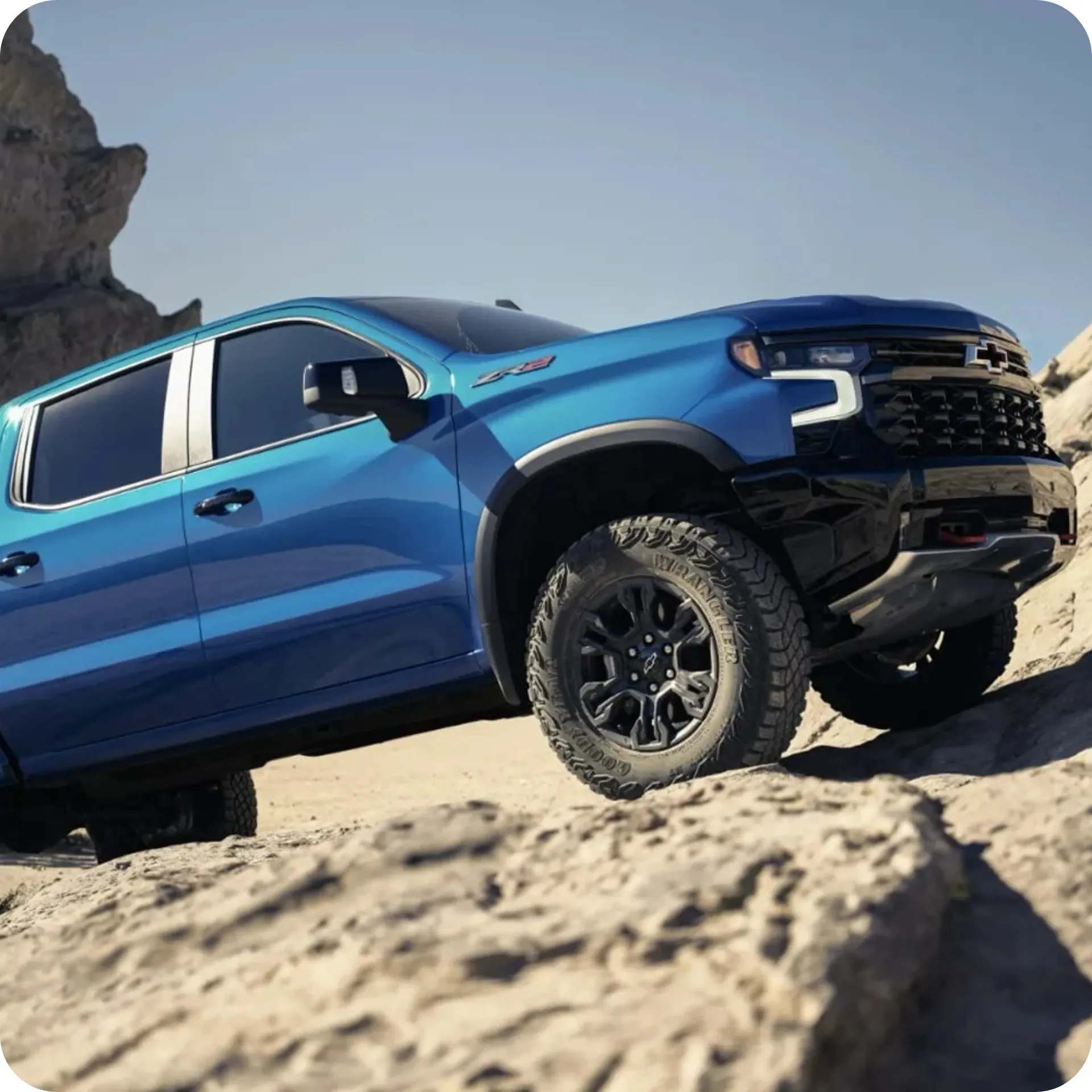
Blue Chevrolet Silverado 1500 climbing over sandy rocks on an off-road trail

The Silverado 1500 is for you if:

The Silverado 1500 is worth a look if you want a versatile truck for daily life, work and recreation, with occasional or regular towing that stays within the limits of your configuration without always running at the edge of what your truck can pull. If you do, you will wear components prematurely and likely regret it. Another advantage of the 1500 is that it also offers a lot more engine choices, including the 3.0 L Duramax if you rack up kilometres or tow often.

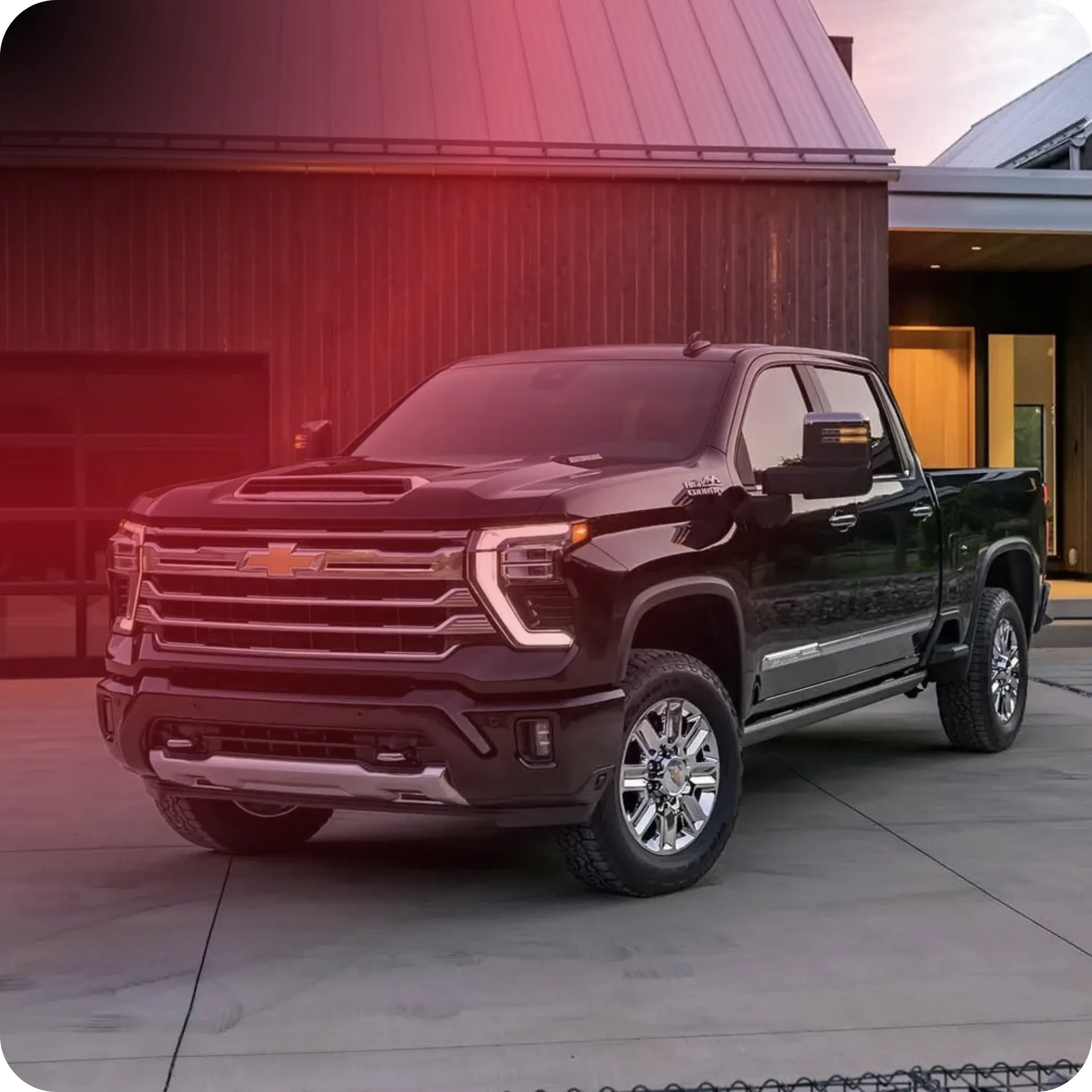
Black Chevrolet Silverado 2500 HD parked in front of a dark wood barn-style building

The Silverado HD 2500 is for you if:

The 2500 HD becomes interesting when heavy towing is a regular part of your use, or if you don’t want to always be at your half-ton’s limit. We are talking here about big travel trailers, fifth-wheels, horse trailers or equipment flatbeds. You mainly gain a truck designed to handle these loads on a regular basis, without necessarily moving up to the size and maximum capacities of the 3500.

White Chevrolet Silverado 3500 HD dually, rear three-quarter view, on a dirt work site

The Silverado HD 3500 is for you if:

Your loads regularly exceed what the 2500 HD can handle: hay trailer, dump bed, large RV. Dual rear wheels add the stability needed under the pin weight of a heavy fifth-wheel. With the Duramax, you can aim for 36,000 lb. (16,329 kg)**.

Pro tip:

“If you want to be sure you leave with the right truck, you need to talk to someone with the experience to guide you well. An expert knows all the precise payload and towing data, not just the maximum advertised by the manufacturer. But it doesn’t stop there. We also know laws. That’s why you should come to discuss your needs with someone who knows all of this and has the experience to provide proper guidance.

A truck for personal use or commercial use in Quebec is not the same thing.

The laws in Quebec under the Ministère des Transports will not be the same in both cases. Commercial? What type of business? Do you tow heavy loads? OK, but how often? What is the exact use? We are here to help you sort it all out.”

‒Alexandre Rivest, sales consultant.

Silverado HD vs. Silverado 1500: when to move up to an HD model?

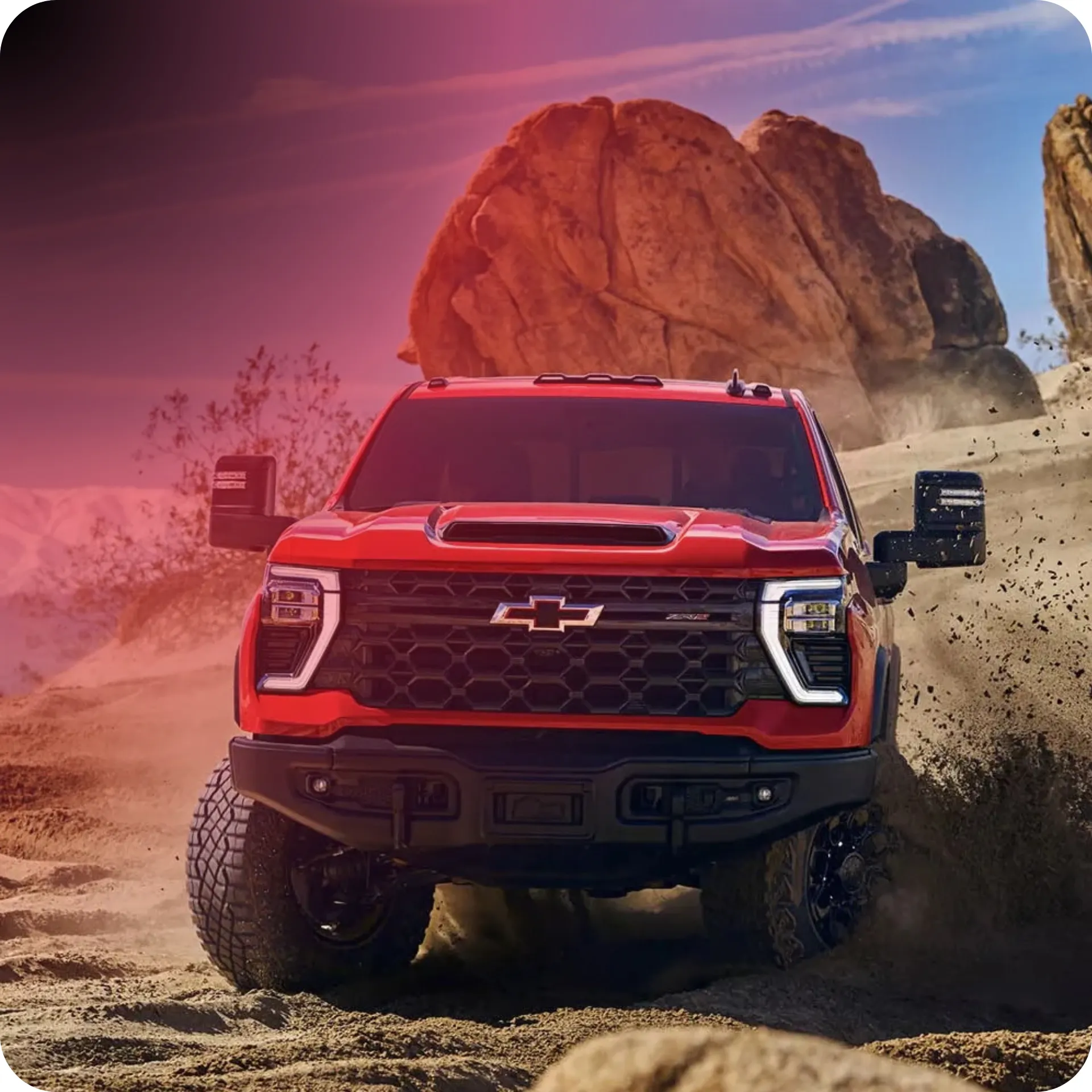
Red Chevrolet Silverado 3500 HD driving off-road through sand in front of a large red rock

The comparison of the 2026 Chevrolet Silverado 1500 vs. Silverado HD 2500 comes down to three key points. First: you regularly approach 80% of the towing capacity for your specific configuration. Second: your hitch is a gooseneck or a fifth-wheel, a setup the half-ton simply does not cover. Third: tongue weight makes the rear of your truck sag, a sign that payload is reached well before towing capacity.

To be certain and make the right choice, the best step is always to come chat with a Paillé expert. That’s what we’re here for and we have the expertise to ask the right questions, including the ones you might not have thought of.

Comparison table: Silverado 1500 vs. 2500 HD vs. 3500 HD

This table separates the 1500, the 2500 HD and the 3500 HD.

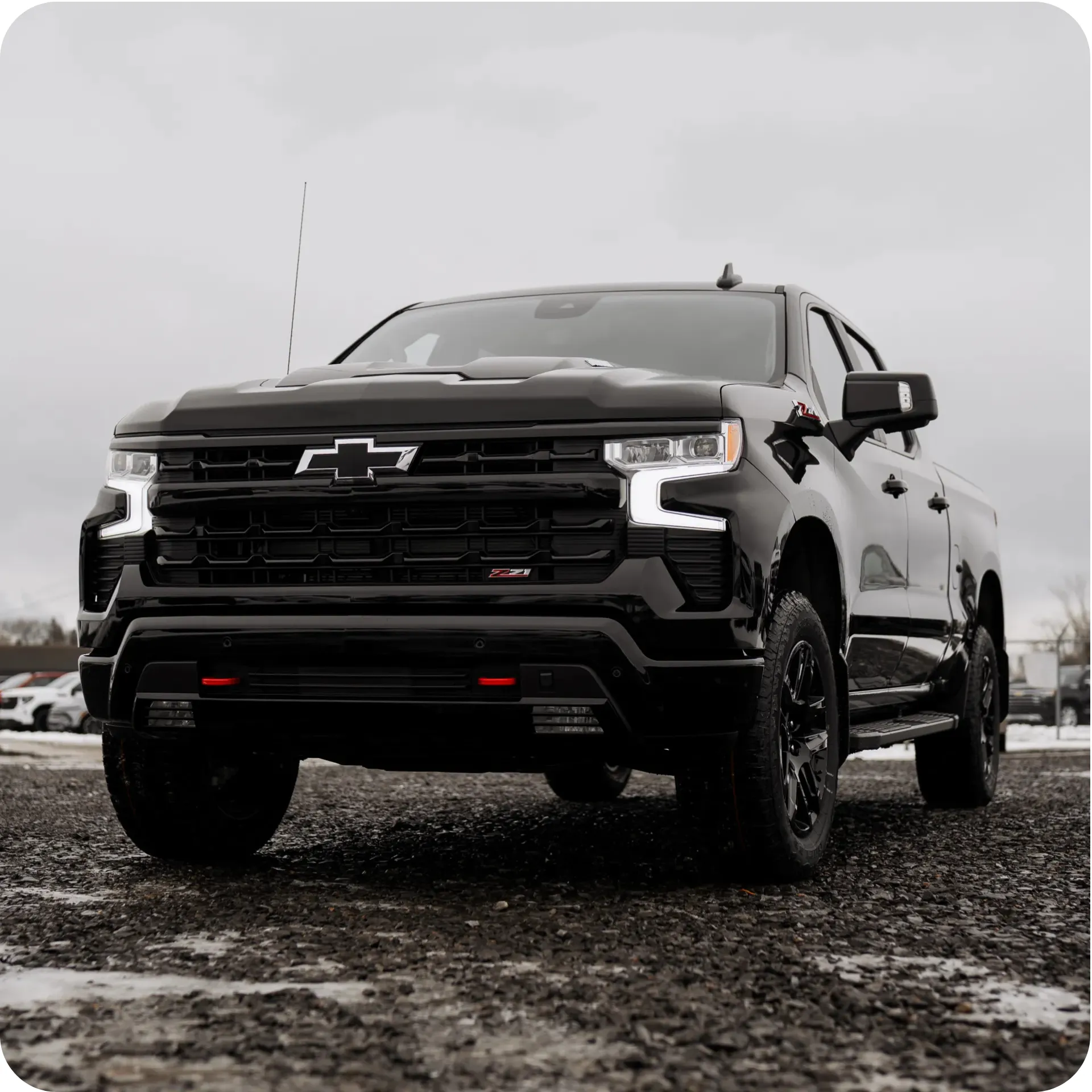
Black Chevrolet Silverado 1500 parked on gravel under an overcast sky


Criterion Silverado 1500 Silverado 2500 HD Silverado 3500 HD
Maximum towing** 13,300 lb. (6,033 kg) 22,070 lb. (10,011 kg) 36,000 lb. (16,329 kg)
Strongest engine 3.0 L Duramax (305 horsepower, 495 lb-ft) 6.6 L Duramax (470 horsepower, 975 lb-ft) 6.6 L Duramax (470 horsepower, 975 lb-ft)
Dual rear wheels Not offered Not offered Offered
Overall length 211 to 242 in 235.5 to 266 in*** 235.5 to 266 in***
Curb weight 4,409 to 5,710 lb. 6,266 to 8,406 lb. 6,402 to 8,552 lb.
Typical use Family, light work, recreation Fifth-wheel, machinery, jobsite Extreme loads, large RV

*** Value published by Chevrolet for the entire Silverado HD family, not broken down separately by tonnage.

Silverado 2500 HD or 3500 HD: when does the 3500 become necessary?

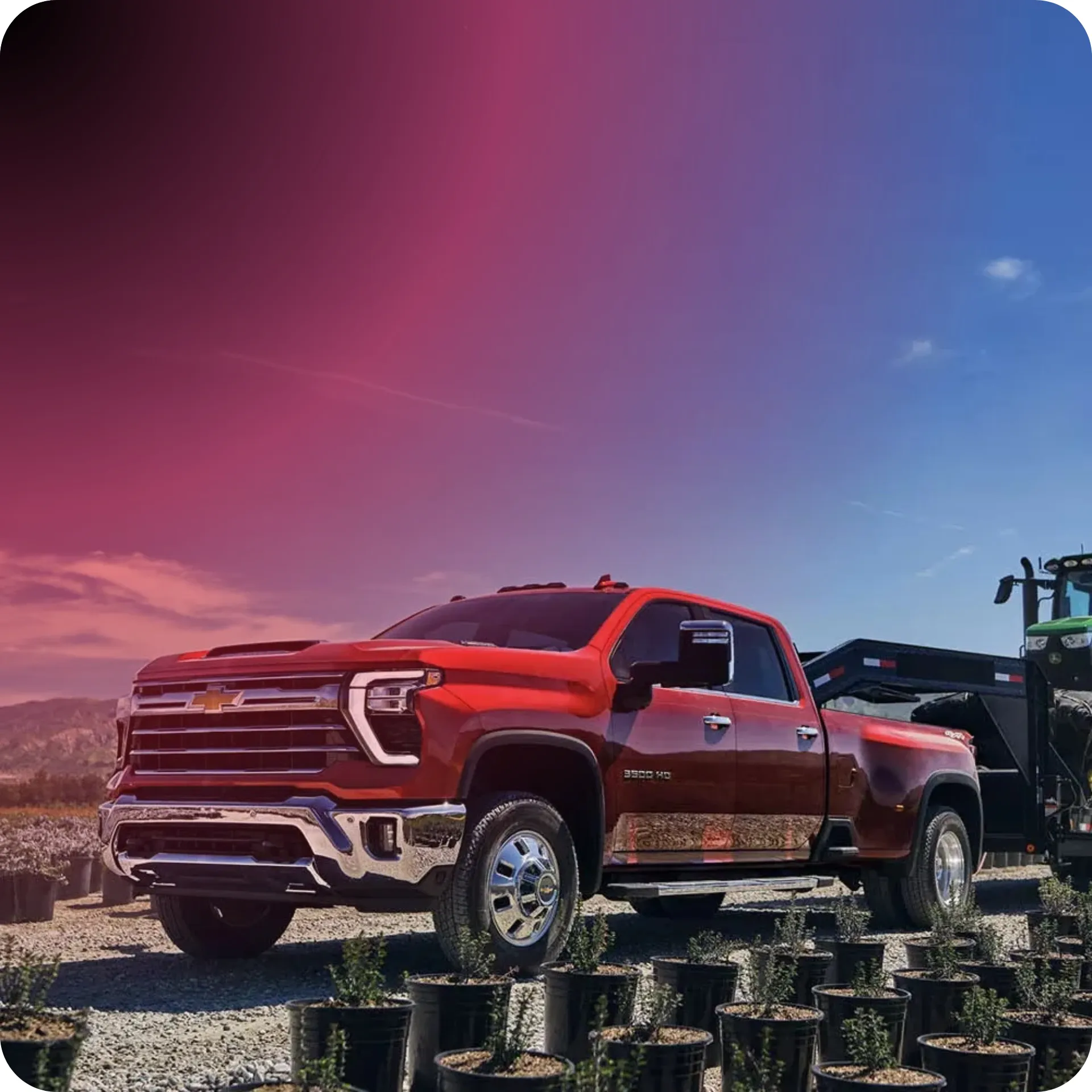
Red Chevrolet Silverado 3500 HD hauling a tractor on a trailer, with mountains in the background

Since both can receive the same 6.6 L V8, moving from the 2500 to the 3500 is not about getting a more powerful engine. It is mainly about capacity.

The 3500 becomes appealing when the 2500's payload starts to be the limiting factor, especially with a big fifth-wheel that transfers a significant portion of its weight directly into the cargo bed. Dual rear wheel configurations also increase capacity and stability under very heavy loads.

If your needs remain comfortably within the 2500's limits, the 3500 is not automatically a better choice.

FAQ 

Can I use a Silverado 1500 to tow a travel trailer occasionally, even if that is not my main use?

Yes. With up to 13,300 lb. (6,033 kg)** of advertised maximum towing, it covers the vast majority of 20 to 26-foot travel trailers. The best move is still to come discuss it with a Paillé expert over a coffee.

Contact us

Don't worry! We'll never share or sell your personal information.Privacy Policy
Logo Access 360